
Same-Day Emergency Dental Appointments
We offer same-day relief for urgent dental issues like tooth pain or broken, cracked, or chipped teeth. Call now to be seen right away!
Like many avoidable disasters, trouble with braces often begins with something small, glossy, and wrapped in bright paper. A single caramel can do what months of careful orthodontic work did not ask for: bend a wire, loosen a bracket, and turn a simple snack into an unplanned appointment.
That tension is familiar in any dental office. Candy is tied to holidays, family habits, school events, and everyday comfort, while braces ask for restraint that can feel oddly severe. These common eating habits can affect oral health in ways that are easy to overlook.
If the question is whether you can eat candy with braces, the practical answer is yes, but selectively. Soft chocolate that melts easily is usually less risky than sticky taffy, hard candy, or anything that requires heavy chewing. Even then, sugar still feeds oral bacteria, which can raise the risk of plaque buildup, enamel damage, gum irritation, and tooth decay.
That is why candy with braces is not only a question of breaking hardware. It is also a question of protecting the tooth surface throughout treatment.
Smileology’s general dentistry team provides preventive care and ongoing dental support for patients in Niceville, Miramar Beach, and Crestview, including those undergoing orthodontic treatment.
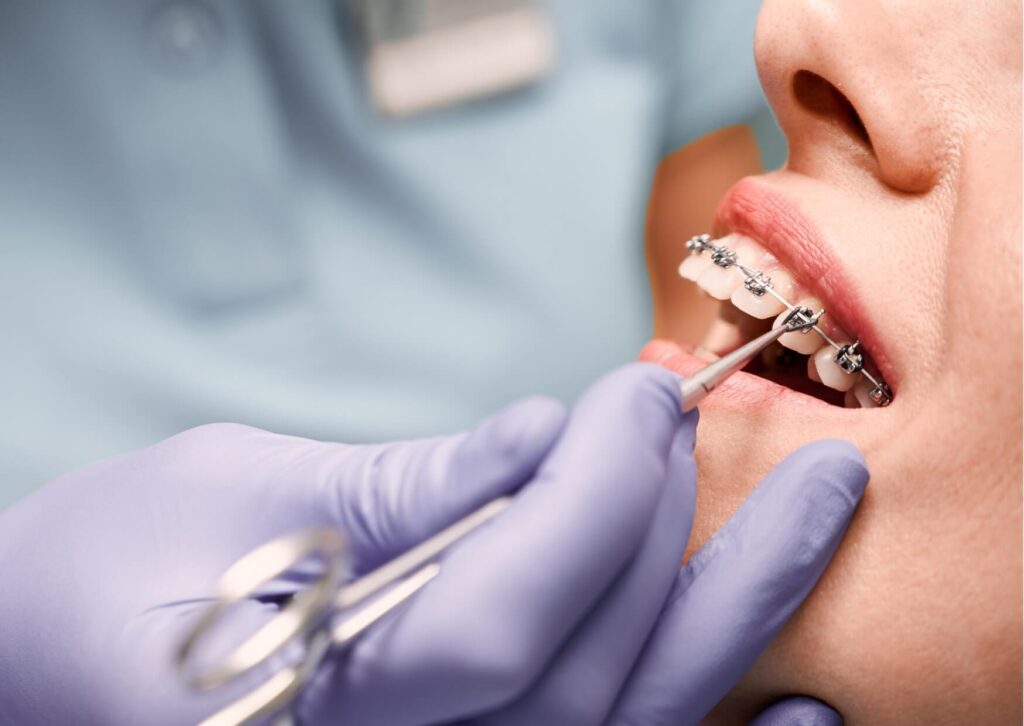
Orthodontic brackets are bonded to teeth with dental adhesive, and the wire applies controlled pressure to move teeth over time. That system works well under normal chewing forces, but certain candies create stress in the wrong direction. Sticky sweets pull on brackets, while hard sweets can crack or dislodge them.
There is also a second problem that matters just as much. Braces make cleaning more difficult, so sugar tends to linger in places a toothbrush may miss on the first pass. Over time, this can lead to white spot lesions around brackets, which are early areas of enamel mineral loss that may remain visible even after braces come off.
In other words, the conflict is partly mechanical and partly biological. One piece of candy may not cause obvious harm, but repeated exposure can make treatment less smooth and oral hygiene more demanding.
Some candies are especially troublesome during orthodontic treatment because they combine sugar with force, stickiness, or acid. These are the sweets most likely to cause problems quickly.
Caramel, taffy, gummies, licorice, and similar candies can cling around brackets and under wires. That pulling action may loosen orthodontic hardware, and the residue is often hard to remove fully with routine brushing.
Jawbreakers, peppermints, lollipops, and other hard sweets are risky whether they are bitten or slowly dissolved. Biting can fracture or detach parts of the braces, while prolonged sucking keeps sugar around the teeth for longer.
Sour candy deserves special caution. It is often both sugary and acidic, and acid can temporarily soften enamel, making teeth more vulnerable to surface damage, especially in areas that are already harder to clean with braces.
Candy bars are not all equal. A soft chocolate bar may be manageable, but bars with hard nuts, brittle layers, or sticky toffee centers can create the same problems as standalone hard or chewy candy.
If candy is going to happen, texture should guide the choice. In most cases, soft chocolate without caramel, nuts, or chewy filling is less likely to damage braces because it breaks apart easily and does not tug on the appliances.
Peanut butter cups and plain chocolate squares are often better tolerated than gummy or hard candies. Soft baked treats may also be easier on braces than candy, though they still contain sugar and can still contribute to plaque buildup.
A useful rule of thumb is simple. If a candy sticks to the molars, stretches when pulled apart, or invites biting down hard, it is probably a poor match for braces. If it melts quickly and clears from the mouth without much chewing, it is usually the lower-risk option.
| Candy Type | Risk for Braces | Main Concern |
| Plain soft chocolate | Lower | Sugar exposure and plaque retention |
| Peanut butter cups | Lower to moderate | Soft texture, but still sugary |
| Caramel | High | Sticks to brackets and wires |
| Taffy and gummies | High | Pulling force and trapped residue |
| Hard candy | High | Broken brackets or bent wires |
| Sour candy | High | Sugar plus acid exposure |
| Candy with nuts or brittle | High | Impact stress on braces |
This happens often enough that orthodontic teams are rarely surprised by it. If a sticky or hard candy slipped through, the first step is not to panic. The next step is to look for obvious changes.
Check whether a bracket feels loose, whether a wire seems bent or out of place, and whether chewing suddenly feels different. Mild tenderness may settle on its own, but a bracket moving on the tooth or a wire poking the cheek usually deserves a call to the orthodontist. For urgent problems such as a bracket that came off or a wire causing injury, our emergency dentistry services can provide prompt care.
Brush thoroughly and clean around the braces as well as possible. If flossing with braces is part of the usual routine, continue gently. Do not try to remove bonded parts, cut wires, or repair braces at home.
If there is significant pain, swelling, bleeding that does not stop, or a sharp wire causing tissue injury, contact the dental office promptly. If the office is closed and there is severe trauma, uncontrolled bleeding, or facial swelling, urgent evaluation may be appropriate. The AAO also offers helpful guidance on orthodontic emergencies.
Every culture has its edible ceremonies. Halloween buckets, movie theater boxes, festival sweets, office candy bowls, and the grandmother who insists one piece cannot possibly matter all bring the same quiet negotiation into the room. The braces, unfortunately, are not interested in social diplomacy.
Dental and orthodontic offices often see the aftermath in clusters. After holidays, there may be more loose brackets, distorted wires, and more plaque around appliances. That does not mean celebration has to become joyless, but it does mean planning helps.
A reasonable approach is to choose a small amount of lower-risk candy, eat it with a meal rather than grazing for hours, and clean the teeth soon afterward. Frequent sugar exposure is usually worse than a single, contained treat because the mouth stays in an acid-producing cycle for longer.
One person says braces mean no candy at all. Another shrugs and says everyone eats whatever they want. The truth, as usual, is less dramatic and more useful.
Braces are a temporary medical treatment, not a purity test. The goal is to reduce avoidable damage and keep treatment on track. That means understanding patterns, not chasing perfection.
From a practical standpoint, the best advice is simple. Avoid the candies most likely to break hardware or cling to teeth. Limit sugary snacks instead of letting them stretch across an afternoon.
Keep follow-up visits, and ask the treating orthodontist about any office-specific restrictions based on the type of braces being used. Traditional metal braces, ceramic braces, and other orthodontic systems may have slightly different vulnerabilities.
For some patients, clear removable aligners are an option that reduce certain candy-related restrictions. Speak with the team about Invisalign options if you are exploring alternatives. You can also read more about our Invisalign clear aligners.
Sometimes the issue is not a dramatic snap or a bracket in your hand. It is the slower pattern: puffy gums, persistent plaque, bad breath, chalky white areas near brackets, or new tooth sensitivity. Those changes may suggest that cleaning is not keeping pace with sugar exposure.
Early enamel changes can be subtle at first, so it helps to learn how to keep enamel healthy. Gums may also become inflamed when plaque sits around brackets and along the gumline. If you are worried about gum changes, review the signs of gum disease.
A dentist or orthodontist can help determine whether the problem is mainly hygiene-related, diet-related, or due to another issue such as mouth breathing or dry mouth. If symptoms are persistent, worsening, or unclear, schedule an evaluation rather than guessing.
Orthodontic treatment works best when the teeth and gums stay healthy enough to support tooth movement safely. A sensible braces diet does not need to be joyless, only informed. If candy choices keep causing uncertainty, damage, or cleanup battles, that is a good reason to ask the dental team for guidance tailored to the braces in your mouth and your everyday habits.
If you have braces and want to keep your oral health on track throughout treatment, Smileology's general dentistry team is here to help. With dental offices in Niceville, Miramar Beach, and Crestview, you can choose the location that works best for you. Call our Niceville office at (850) 897-4488, our Miramar Beach office at (850) 424-7887, or our Crestview office at (850) 331-3392 to schedule your visit.
Usually yes, if it is soft chocolate without sticky caramel, hard nuts, or brittle pieces. It is still best to clean the teeth afterward because sugar can collect around brackets.
The main ones to avoid are sticky, chewy, hard, and sour candies. Caramel, taffy, gummies, jawbreakers, and similar sweets are common causes of broken brackets and difficult cleanup.
Not always, but it should be reported to the orthodontist. If the bracket is moving, the wire is poking, or there is significant pain or tissue injury, contact the office promptly.
They may reduce sugar exposure, but they are not automatically safe for braces. If the candy is sticky, chewy, or hard, it can still damage brackets or wires.
Eating candy with a meal is usually the better choice. It shortens the amount of time teeth are exposed to sugar and is often easier to follow with brushing or rinsing.