
Same-Day Emergency Dental Appointments
We offer same-day relief for urgent dental issues like tooth pain or broken, cracked, or chipped teeth. Call now to be seen right away!
A lost tooth has a way of turning into a small social drama. In one family, replacing it quickly may be treated like basic maintenance, almost as routine as fixing a cracked window. In another, the idea of paying thousands for what seems like a single tooth can feel extravagant, puzzling, even faintly absurd. Somewhere between those views sits the real question most patients are asking: what is the cost of dental implants, and why do the numbers vary so much?
That confusion is understandable. Dentistry often compresses several different services into one phrase, and patients are left comparing quotes that may not describe the same treatment at all. One office may be talking about the implant post alone; another may be including the crown, imaging, sedation, and follow-up visits. What sounds like disagreement is often a problem of translation.
Dental implants can be an excellent option for replacing missing teeth, but they are not a commodity in the way a phone or a pair of glasses might be. The price reflects anatomy, planning, materials, lab work, surgical complexity, and the condition of the bone and gums. A lower quote is not automatically a bargain, and a higher one is not automatically better.
The more useful question is what the fee includes, what risks are being managed, and whether the treatment plan fits the mouth in front of the dentist. For patients who want a clearer sense of long-term value, our article on the benefits of dental implants explains how outcomes, function, and patient satisfaction can change the calculation.
Patients exploring dental implants with Smileology can receive a clear explanation of what their treatment plan may include, along with guidance tailored to their goals and oral health needs. Our teams in Crestview, Miramar Beach, and Niceville help patients understand their options in a calm, supportive setting without pressure or confusion.
When patients hear a number for the full implant process, it may include several separate parts. The implant itself is a small titanium or ceramic post placed in the jawbone to act like an artificial tooth root. In most cases, that is only one step in a longer sequence.
A complete fee may include the consultation, dental X-rays or a 3D scan, surgical placement of the implant, a healing period, an abutment, and the final crown. The abutment is the connector piece that links the implant to the visible tooth. Some offices bundle these items into one global fee, while others list them separately.
That distinction matters. A quote that sounds surprisingly low may cover only the surgical implant placement and not the final restoration, which is the part that looks and functions like a tooth. If bone grafting, gum treatment, tooth extraction, temporary teeth, or sedation are needed, those are often billed separately as well.
In practical terms, many single-tooth implant cases in the United States fall somewhere in the range of several thousand dollars from start to finish. Complex cases can cost more, especially in areas with higher overhead or when additional procedures are required. The exact number depends less on the word implant and more on everything needed to make that implant stable, healthy, and usable. For a university-based example of the average cost, Penn Dental Medicine offers a helpful overview.
If implant pricing sometimes feels like airfare, with one number on Monday and another on Friday, there is at least a better reason for it. Teeth do not disappear under identical circumstances. Some are lost after trauma with healthy surrounding bone. Others are lost after years of infection, bone loss, grinding, or gum disease. Those differences shape cost.
The first major factor is bone. An implant needs enough healthy jawbone for support. If the bone has thinned after a tooth has been missing for a long time, bone grafting may be needed before or during treatment. A graft is a procedure that adds or supports bone in an area that is too narrow or too shallow for a stable implant.
The second factor is location in the mouth. Front teeth often require more cosmetic precision because even a subtle mismatch in gum contour or crown shape can be obvious when speaking or smiling. Back teeth carry heavier chewing forces and may require a different restorative design. Upper back teeth can also be complicated by the nearby sinus, which in some cases makes a sinus lift necessary.
The third factor is the condition of the gums and neighboring teeth. Active periodontal disease, meaning inflammatory gum disease that damages the tissues supporting teeth, may need to be controlled before implant placement. If the bite is unstable or there is significant clenching, the long-term plan may need adjustment to reduce stress on the implant.
Materials and laboratory work also affect pricing. Different implant systems, crown materials, and digital workflows can change the fee. So can geography. A practice in Manhattan, central London, or downtown San Francisco will usually have different operating costs than a suburban or rural office. That does not mean one setting is inherently better. It simply means overhead is part of the equation.
There is a mildly anthropological lesson here. In every profession, insiders use shorthand, and outsiders are expected to somehow know what the shorthand means. Dentistry is no exception. A patient may ask, “How much is an implant?” and receive an honest answer that still fails to answer the real question.
Some offices use implant to mean only the metal post in the bone. Others use it to describe the entire tooth replacement from surgery to crown. Still others advertise a starting price that applies only to unusually straightforward cases. None of this is necessarily deceptive, but it can produce the same effect as two people arguing about the price of a house when one means the land and the other means the furnished home.
When comparing estimates, ask for a written treatment plan that identifies each part of care. It should clarify whether the fee includes records, extraction, grafting, temporary tooth replacement, implant placement, healing cap, abutment, final crown, follow-up visits, and any sedation. A quote becomes far more meaningful once the vocabulary is translated into actual steps.
Patients are right to ask whether a higher fee is worth it. Sometimes the answer is no. Sometimes it clearly is. The difference often lies in planning and risk control rather than in luxury.
A careful implant workup may include a cone beam CT scan, which is a 3D image that helps the dentist evaluate bone volume, nerve position, sinus anatomy, and angulation. That level of planning can reduce surprises during surgery and improve the fit and function of the final restoration. Some practices also use guided systems such as YOMI robotic surgery to translate digital planning into precise implant placement. That may increase upfront cost, but it also serves a clinical purpose.
Training and coordination matter too. Some implant cases are managed by a general dentist with strong implant experience. Others involve a team, such as an oral surgeon, periodontist, and restorative dentist. Specialist involvement can raise cost, but in medically or anatomically complex cases it may also improve predictability.
The restoration matters just as much as the surgery. An implant that integrates well with bone but ends up with a poorly shaped crown, an unstable bite, or hard-to-clean contours is not a true success. One of the most sensible ways to judge value is to ask how the office plans for long-term maintenance, not just placement day.
Affordable care is not a red flag by itself. Some practices keep fees lower through efficiency, lower overhead, or high procedural volume. Dental schools and residency programs may also offer reduced fees, often with supervision by experienced faculty. Those can be reasonable paths for many patients.
Still, very low implant pricing deserves careful questions. If a quote seems dramatically below the local norm, ask what is excluded, what happens if grafting is needed, who makes the final crown, and how follow-up complications are handled. A low entry price can become less attractive if each necessary step is added later as a separate fee.
Patients should also be cautious about treatment that feels rushed in the setting of active infection, uncontrolled gum disease, or an unclear diagnosis. Not every missing-tooth site is immediately ready for an implant. A thoughtful evaluation should include the health of the surrounding tissues, the bite, and the patient’s broader medical history.
Urgent symptoms deserve separate attention. Significant facial swelling, fever, pus drainage, severe worsening pain, or trouble swallowing are not ordinary pricing questions. Those signs may point to infection or other implant risks and should prompt dental or medical evaluation.
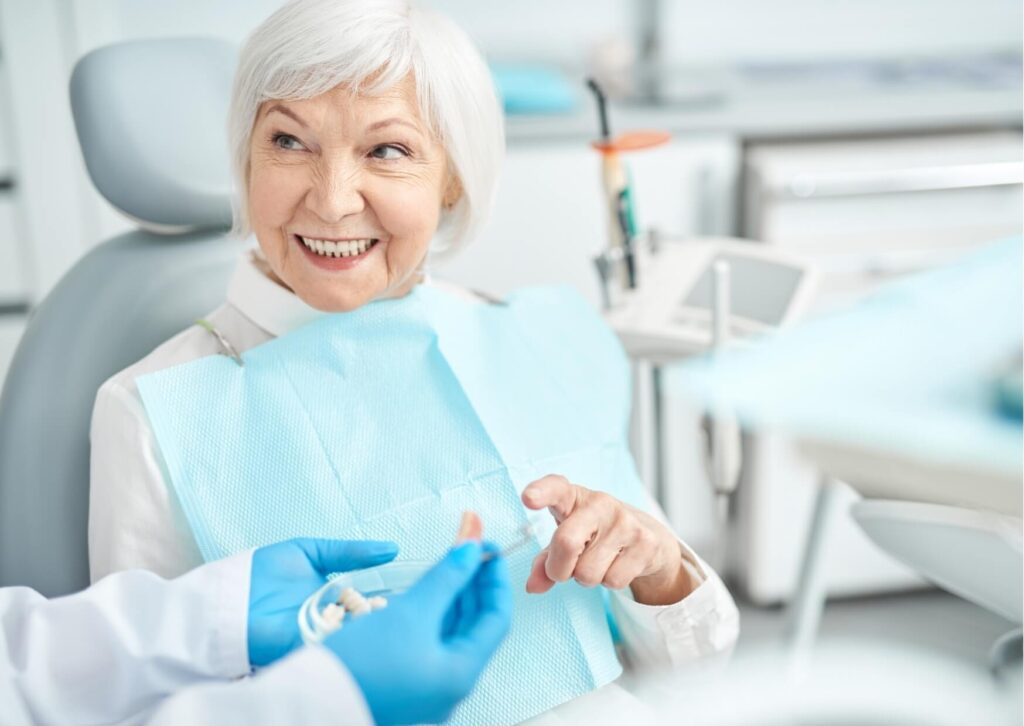
Cost only makes sense when tied to alternatives. For one missing tooth, the main comparison is often between a dental implant and a bridge. A bridge uses the neighboring teeth for support, which can be a reasonable option in the right case, especially if those teeth already need crowns. An implant, by contrast, usually avoids cutting down adjacent teeth and may help preserve bone in the missing-tooth area.
We also cover implants and dental bridges in more detail if you'd like a side-by-side comparison.
For multiple missing teeth, the comparison may involve removable partial dentures, implant-supported bridges, or implant-supported dentures. A removable denture usually costs less upfront, but some patients find the fit, chewing efficiency, or movement frustrating over time. Implant-supported options often cost more initially but may improve stability and comfort.
There is no morally superior choice here, despite the way treatment discussions sometimes drift into quiet status signaling. The right decision depends on anatomy, goals, budget, maintenance ability, and tolerance for surgery. A well-made bridge or denture may be more appropriate than an implant in some mouths. A good clinician should be able to explain why.
A useful implant consultation should leave a patient less confused, not more. It is reasonable to ask direct questions, and a good office should be able to answer them clearly.
| Question | Why It Matters |
| What exactly is included in this fee? | Helps distinguish the implant post from the full restoration. |
| Will I likely need bone grafting or other preparatory treatment? | Identifies common add-on costs early. |
| Who places the implant and who makes the final crown? | Clarifies whether one clinician or a team is involved. |
| What imaging is being used to plan treatment? | Shows how anatomy and risk are being evaluated. |
| What temporary tooth option will I have during healing, if needed? | Important for front teeth and work or social situations. |
| What maintenance will the implant need over time? | Long-term cleaning and follow-up affect value. |
| What happens if the site does not heal as expected? | Helps patients understand complication policies and next steps. |
Written estimates are especially helpful if more than one office is involved. If two treatment plans seem far apart in price, ask each office to explain the difference line by line. That often reveals whether the disagreement is about quality, complexity, or simply what has been counted.
By the end of most implant conversations, the number itself is only part of the story. Patients are also trying to judge credibility, caution, and whether the plan respects both biology and budget. That is why the same quote can feel reassuring in one office and unsettling in another.
The cost of dental implants is best understood not as a single price tag, but as the total cost of replacing a tooth well. That includes diagnosis, planning, surgery, restoration, and maintenance over time. If the explanation is clear, the alternatives are honestly discussed, and the risks are acknowledged without drama, patients are in a much better position to decide whether the investment makes sense. For patients looking for practical ways to manage those expenses and payment options, our guide to the cost of dental treatment at Smileology may be helpful.
In dentistry, as in travel, translation improves everything. Once the terms are defined and the assumptions are visible, the clash between sticker shock and clinical value becomes easier to navigate. And that, more than any advertised number, is what helps a patient make a sound decision.
The cost of dental implants is about more than a single number on a treatment estimate. Long-term function, careful planning, restorative quality, and ongoing oral health all contribute to the overall value of implant treatment.
Patients who understand what is included in their care are often better prepared to make confident decisions about tooth replacement.
If you are considering dental implants, Smileology proudly serves patients in Crestview, Miramar Beach, and Niceville, FL with personalized consultations, advanced implant technology, and clear treatment guidance tailored to your needs.
Call Niceville at (850) 403-9526, Miramar Beach at (850) 409-0260, or Crestview at (850) 608-1639 to schedule.
A single implant often costs several thousand dollars in total when the implant, abutment, and crown are all included. The final amount may be higher if extraction, grafting, sedation, or cosmetic shaping of the gums is needed.
The fee reflects multiple stages of care, not just one part. Imaging, surgical planning, materials, lab work, restorative design, and follow-up all contribute to the total cost.
No. The implant post is the part placed in the bone. The visible tooth usually also requires an abutment and a crown.
Sometimes lower-cost care is perfectly reasonable, especially in efficient practices or teaching settings. The important issue is whether the quote includes proper diagnosis, planning, restoration, and follow-up.
Coverage varies widely. Some plans may cover part of the procedure or related services, while others exclude implants but contribute to alternative treatments. It is worth asking for a pre-treatment estimate.
Seek prompt evaluation if there is major swelling, fever, pus, rapidly worsening pain, bleeding that does not stop, or trouble swallowing. Those symptoms may signal an urgent dental or medical problem.