Same-Day Emergency Dental Appointments
We offer same-day relief for urgent dental issues like tooth pain or broken, cracked, or chipped teeth. Call now to be seen right away!
There is something almost Homeric about replacing a lost tooth. A small titanium post is asked to stand in for bone, root, and habit, then quietly rejoin the daily rituals of coffee, conversation, and chewing. Modern dentistry can make that exchange feel almost ordinary, yet the decision is rarely simple.
That is where many patients run into a kind of cultural clash. On one side is the sleek promise of a “permanent tooth replacement.” On the other is the older, practical wisdom that every dental treatment involves tradeoffs. The truth lives between those camps. If you are weighing dental implants pros and cons, the useful question is not whether implants are good or bad in the abstract. It is whether they make sense for this mouth, this health history, and this set of priorities.
A dental implant is a small post, usually made of titanium, placed in the jawbone to act like an artificial tooth root. After healing, a connector and a crown are attached so the replacement looks and functions more like a natural tooth than a removable option would. In the right case, implants can be excellent. In the wrong case, or when expectations are poorly matched to reality, they can be expensive, slow, and disappointing.
Smileology provides personalized implant evaluations for patients in Niceville, Miramar Beach, and Crestview. Our team can help you better understand dental implants pros and cons, including candidacy, treatment timelines, healing expectations, and long-term maintenance, so you can make a decision that feels informed and realistic for your needs.
The strongest argument for implants is that they replace both the visible tooth and the root beneath it. That matters because the jawbone depends on stimulation from chewing. When a tooth is lost, the bone in that area may gradually shrink, a process called resorption. An implant can help preserve that bone better than a traditional bridge or removable partial denture in many cases.
Patients also tend to like the stability. A well-integrated implant, meaning one that has fused with the surrounding bone through a process called osseointegration, often feels more secure than a removable option. Speech may feel more natural. Chewing may feel more confident. For a single missing tooth, an implant also avoids grinding down the neighboring teeth to support a bridge.
In everyday life, the appeal is easy to understand. A front tooth lost in a fall, a molar removed after a crack, or a long-missing tooth in an otherwise healthy mouth can all make implants seem like the most elegant solution. In many of those situations, they are.
Here are the benefits that most often matter in real decision-making:
| Potential Advantage | Why It Matters |
| Feels more like a natural tooth | Because the implant is anchored in bone, it is usually more stable than a removable option. |
| Helps preserve jawbone | Bone loss may slow in the area where the implant is placed. |
| Does not rely on adjacent teeth | Unlike some bridges, it usually does not require reshaping neighboring teeth. |
| Long service life | With good planning, healthy tissues, and regular maintenance, implants can last many years. |
| Can improve chewing efficiency | Many patients find firmer foods easier to manage compared with dentures. |
| Cosmetic flexibility | A well-designed implant crown can blend in very naturally, especially in the right tissue conditions. |
Still, anthropology offers a useful lesson here. People do not judge teeth by mechanics alone. A patient may care as much about confidence at a family dinner or not having a denture move during a meeting as about bite force or bone preservation. Those concerns are not vanity. They are part of function too.
The miscommunication around implants usually starts here. Patients may hear the word permanent and imagine a quick, one-time fix. Dentists are often thinking in longer timelines and biological probabilities. The implant itself may be durable, but the tissues around it still need to heal, stay healthy, and tolerate years of use.
One drawback is cost. Implants often cost more upfront than bridges or dentures, especially if imaging, bone grafting, sinus lift surgery, or temporary restorations are needed.
The final price can vary widely by region, complexity, and whether the missing tooth is in a straightforward site or a demanding cosmetic area.
Time is another issue. Some cases move efficiently, but others unfold over months. If a tooth must be removed, the site may need to heal first.
If bone volume is limited, grafting may be recommended. Then the implant needs time to integrate with bone before the final crown is placed. For patients hoping for immediate closure, that timeline can feel surprisingly long.
There is also the fact that implants are surgery. Even routine implant placement involves the gums, bone, and the body’s healing response. Swelling, soreness, and temporary dietary limits are common. More importantly, complications can happen. An implant may fail to integrate. The gumline may recede. The crown may loosen. Infections around implants can occur, including peri-implantitis, an inflammatory condition that affects the gum and bone around an implant.
When precision matters, robotic guidance can assist with digital planning and more accurate placement, and you can learn more about our robotic implant assistance. Options like sedation dentistry can also help patients feel more comfortable during the procedure.
Most implant cases do well, but good consent depends on understanding what can go wrong. Some risks relate to healing, some to design, and some to long-term maintenance.
Early problems may include bleeding, swelling, pain beyond what is expected, delayed healing, or failure of the implant to bond to bone.
In the upper back jaw, sinus anatomy can complicate placement. In the lower jaw, nerves must be respected carefully because injury can lead to altered sensation.
Longer-term issues may include gum inflammation, bone loss around the implant, loosening of components, chipping of the crown, or bite-related overload. Smoking, uncontrolled diabetes, teeth grinding, and poor home care can raise risk in some cases.
A history of periodontal disease, which is advanced gum disease affecting the supporting tissues of the teeth, may also matter.
Contact a dentist promptly if there is increasing swelling, pus, fever, worsening pain, a loose implant, or sudden changes in bite. Those signs do not always mean a serious complication, but they should not be ignored.
If swelling is spreading, breathing feels affected, or there is significant difficulty swallowing, urgent medical evaluation is appropriate.
A good implant candidate usually has enough bone to support the implant, healthy gums, and a realistic understanding of the process. Age by itself is rarely the deciding factor. A healthy older adult may be a better candidate than a younger person with uncontrolled gum disease or heavy smoking.
Dentists also look closely at the details of the site. A single missing premolar in a healthy jaw is different from a front tooth in a high-smile line, where tiny changes in gum contour can affect appearance. A long-standing missing tooth may have more bone loss than a recently lost tooth. The upper back jaw often has softer bone than the lower front jaw, which can influence planning.
Extra caution may be needed when there is active periodontal disease, poorly controlled blood sugar, significant bruxism or clenching, prior radiation to the jaws, certain medications that affect bone turnover, or limited ability to maintain oral hygiene. That does not automatically rule implants out. It means the evaluation should be thorough and individualized.
The fairest way to discuss dental implants pros and cons is to compare them with the alternatives patients actually face. For a deeper look at choices between implants and bridges, see implants and bridges.
| Option | Strengths | Limitations |
| Dental implant | Replaces root and crown, often stable, may preserve bone, does not usually involve adjacent teeth | Higher cost, surgery required, longer treatment time, possible complications |
| Traditional bridge | Faster in some cases, fixed in place, no surgery | Usually requires reshaping neighboring teeth, does not replace the root, bone loss may continue under the missing tooth area |
| Removable partial denture | Lower upfront cost, non-surgical, can replace multiple teeth | May feel bulky, can move during eating or speaking, may place stress on other teeth, often less natural feel |
| Full denture or implant-supported denture | Can restore many missing teeth, implant support may improve retention greatly | Conventional dentures may be unstable, implant-supported dentures still involve surgery and cost |
In practice, the best option is often the one that fits both biology and life circumstances. A patient with strong adjacent teeth and a tight timeline may reasonably choose a bridge. Another patient who wants to avoid a removable appliance and preserve bone may prefer an implant. Dentistry is not a morality play. It is usually a negotiation between ideal mechanics and lived reality.
When patients ask whether implants are worth it, they are often asking two different questions at once. First, what is the price? Second, what is the likely value over time?
The total cost may include the consultation, three-dimensional imaging, extraction if needed, bone grafting, the implant itself, healing components, the final abutment and crown, and future maintenance or repairs. That is why quotes can differ so much between offices. One treatment plan may look cheaper simply because it excludes steps another office considers necessary for a safer result.
Value is more personal. If an implant helps restore comfortable chewing, avoids a removable appliance, and lasts for many years with manageable maintenance, many patients consider it money well spent. If the site is high-risk, the cosmetic demands are extreme, or regular follow-up is unlikely, the equation can look different. A candid conversation about both budget and biology is better than pretending one can be ignored.
The immediate recovery after implant placement is often manageable, though not trivial. Mild to moderate soreness, swelling, and tenderness are common for a few days. Many patients return to desk work quickly, but the mouth may still feel aware of the procedure for longer than expected.
The bigger surprise is usually the biological waiting. Bone healing is not theatrical. It is patient, quiet, and slow. Even when a temporary tooth is possible, the final restoration may still need to wait until the implant is stable enough to support long-term function.
This is one place where expectations matter enormously. If the goal is a same-week cosmetic fix with no interruptions, implants may disappoint. If the goal is a carefully built replacement with a strong long-term rationale, the timeline often makes more sense.
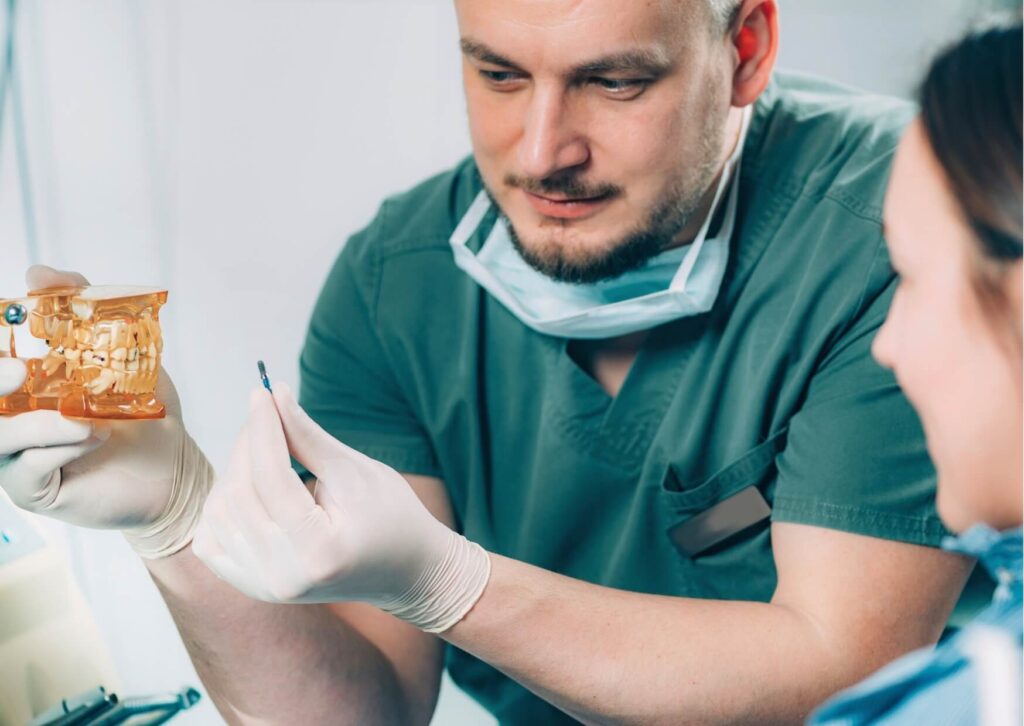
A thoughtful implant consultation should leave room for questions, not just signatures. Consider asking:
A careful dentist should be able to explain not only the plan, but also why the plan fits the anatomy and the risks.
Often, yes. But not automatically.
The best case for implants is strong: they can replace a missing tooth in a way that is stable, functional, and protective of surrounding structures. For many patients, they are the closest modern dentistry comes to rebuilding what was lost. That is the persuasive side of the story, and it is not wrong.
The other side matters just as much. Implants are technique-sensitive, biologically dependent, and sometimes unforgiving of poor planning or poor maintenance. They can fail. They can look less natural than expected in difficult cosmetic zones. They can cost more and take longer than patients anticipate.
Implants are excellent when chosen for the right reasons, in the right anatomy, with the right expectations. They are less impressive when sold as destiny instead of one option among several. A missing tooth is a dental problem. Choosing how to replace it is also a human one, shaped by budget, patience, risk tolerance, and what feels livable day after day.
Ready to explore whether dental implants are the right fit for your smile? Smileology provides personalized implant consultations for patients in Niceville, Miramar Beach, and Crestview. Call the location most convenient for you to schedule a comprehensive evaluation and discuss your options with our dental team: Niceville at (850) 403-9526, Miramar Beach at (850) 409-0260, or Crestview at (850) 608-1639.
Placement is usually done with local anesthesia, so sharp pain during the procedure is generally controlled. Some soreness and swelling afterward are common, but the experience varies by the complexity of the case and the individual healing response.
Implants can last many years and sometimes much longer, but longevity depends on bone support, gum health, bite forces, smoking status, and maintenance. The crown or other attached parts may need repair or replacement before the implant itself does.
Not always. An implant may be better when preserving bone and avoiding treatment on adjacent teeth are priorities. A bridge may make more sense when surgery is not desirable, the timeline is short, or the surrounding teeth already need crowns.
No. Many people are candidates, but not everyone. Bone volume, gum health, medical history, smoking, and the exact tooth location all affect whether an implant is advisable.
Seek prompt dental evaluation if there is worsening pain, swelling, drainage, fever, or movement of the implant or crown. If swelling is severe or affects breathing or swallowing, seek urgent medical care.