
Same-Day Emergency Dental Appointments
We offer same-day relief for urgent dental issues like tooth pain or broken, cracked, or chipped teeth. Call now to be seen right away!
You may be able to get a dental implant the same day as an extraction or after about 3 to 6 months of healing. The right timing depends on infection, bone quality, gum health, and whether the site can hold the implant securely.
If you're deciding when to move forward after a tooth extraction, understanding how dental implants fit into healing can make the next step feel clearer. Smileology's team in Niceville, FL Miramar Beach, FL Crestview, FL can explain which timing option best protects your bone, gums, and long-term result.
After a tooth is removed, the jawbone in that area starts to change because it no longer receives stimulation from the tooth root. Bone loss after extraction is often most active during the first few months, which can affect implant planning.
A dental implant replaces the missing root with a titanium or ceramic post placed in the jaw. For the implant to heal well, it needs enough healthy bone and stable positioning while the bone bonds to it.
The fastest option is not always the safest one. Good timing helps lower the risk of infection, gum recession, poor positioning, and implant failure.
In some cases, an implant can be placed during the same visit as the extraction. This works best when there is enough healthy bone, the gums are in good condition, and the socket is not badly damaged.
Immediate placement can shorten treatment time and may help preserve the natural shape of the gum and bone. It does not always mean you leave with a permanent tooth, and any temporary tooth may need to stay out of biting contact.
Early placement allows the gums to close and inflammation to settle before implant surgery. This option is often chosen when same-day placement is not ideal but a full healing period is not necessary.
The exact timing depends on how the site recovers after extraction. Your dentist may use follow-up imaging to confirm the area is ready.
This is a common timeline for implant treatment. It gives the socket time to heal and is often recommended after difficult extractions, infection, or bone grafting.
A healed site can make placement more predictable. Even then, the bone still has to be checked to confirm it is wide and tall enough for support.
If there has been major bone loss from long-term tooth loss, gum disease, trauma, or a large infection, a larger graft may be needed first. That graft usually needs several months to mature before it can support an implant.
In the upper back jaw, a sinus lift may be part of oral surgery when there is not enough bone below the sinus. Total treatment time depends on the graft, healing response, and whether the implant can be placed at the same stage.
A dentist evaluates the extraction site, nearby teeth, gums, bite, and overall health before deciding on timing. A CBCT scan is often used to measure bone and identify nearby nerves or sinus spaces.
Factors that commonly affect timing include:
A past infection does not automatically rule out an implant. It may simply mean the area needs treatment and healing time before placement.
Socket preservation is a grafting procedure done when the tooth is removed. Graft material is placed in the socket to reduce collapse of the ridge and improve the chance of keeping enough bone for a future implant.
A graft helps preserve bone, but it does not stop all natural changes after extraction. Depending on the defect and graft material, healing may still take several months before implant placement.
Not every extraction site needs grafting. If an implant is likely, it is best to discuss that plan before the tooth is removed because preserving bone early is often simpler than rebuilding it later.
Implant placement is usually done with local anesthesia, and sedation may be an option for some patients. Mild swelling, soreness, bruising, and small amounts of bleeding are common for a few days.
Most implants heal in the jaw for about 2 to 6 months before they are ready for normal chewing pressure. Healing time depends on the location, bone quality, grafting needs, and overall health.
Once the implant has integrated with the bone, the final restoration process begins. That usually includes an abutment and a custom crown, though some cases also need gum shaping.
Follow your dentist's instructions for brushing, rinsing, eating, and using any temporary tooth. Avoid chewing on the surgical area until you are cleared to do so.
Do not smoke or use nicotine during healing. These habits can reduce blood flow and increase the risk of implant complications.
After the final crown is placed, implants still need daily care and regular dental visits. They cannot get cavities, but the surrounding gums and bone can still develop inflammation and bone loss.
A nightguard may be recommended if you clench or grind your teeth. Periodic exams and X-rays help monitor the implant, crown, bite, gums, and supporting bone.
Dental implants can restore chewing function without relying on neighboring teeth the way a bridge does. They can also help preserve bone at the implant site and provide a stable, natural-looking replacement.
Read more about the benefits of dental implants.
Implants are highly successful, but they are not maintenance-free and are not guaranteed to last forever. Gum disease, nicotine use, poor plaque control, uncontrolled health conditions, heavy bite forces, and inadequate bone can all increase risk.
Alternatives may include a removable partial denture, a fixed bridge, or leaving the space untreated in selected cases. Each option has different tradeoffs in comfort, cost, treatment time, and long-term maintenance.
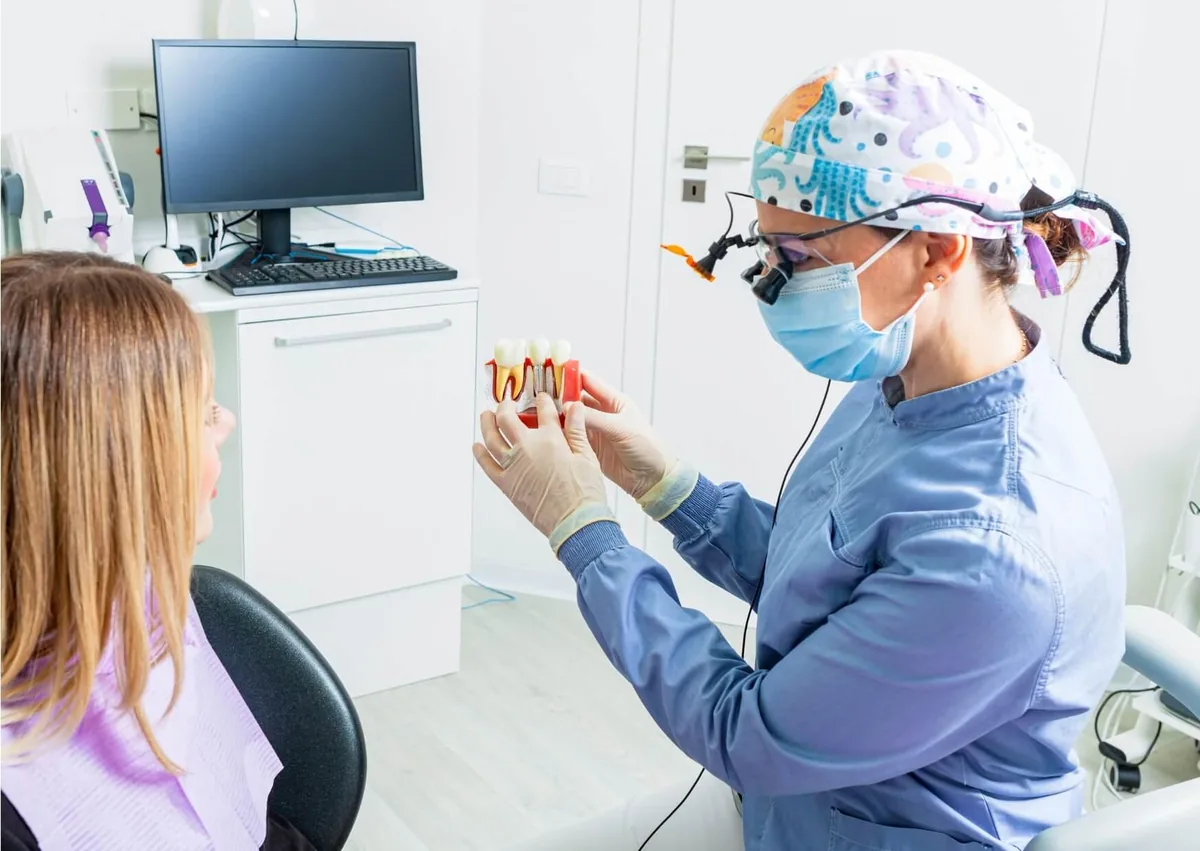
It is best to discuss tooth replacement before the tooth is removed or soon afterward. If you are not sure whether removal is needed, review the signs you need extraction.
Early planning gives your dental team more options for socket preservation, temporary teeth, and implant positioning before bone shrinkage becomes more advanced. That can make treatment simpler and more predictable.
If the tooth has already been missing for months or years, an implant may still be possible after imaging and a bone assessment. Learn more about missing tooth bone loss.
Seek prompt dental care for worsening swelling, fever, pus, uncontrolled bleeding, severe or increasing pain, trouble swallowing or breathing, or numbness that persists after surgery. Trouble breathing or swallowing requires urgent medical attention.
If you’re ready to clarify timing and the best pathway for tooth replacement, a focused implant consultation can review your images and options in one visit.
Contact Smileology for dental implants at our Niceville, FL; Miramar Beach, FL; and Crestview, FL locations to discuss next steps. Call Niceville at (850) 897-4488, Miramar Beach at (850) 424-7887, or Crestview at (850) 331-3392, or book a consultation online.
Yes, in selected cases. The site usually needs enough healthy bone, manageable infection risk, suitable gum tissue, and enough stability to hold the implant securely.
There is no single deadline, but the jawbone can become thinner and shorter over time. Waiting does not always prevent treatment, though bone grafting may become more likely.
Many grafts need several months to mature, often about 3 to 6 months. Larger grafts may require longer, and readiness is confirmed by an exam and imaging rather than time alone.
Often, yes. Options may include a removable temporary tooth, a bonded temporary tooth, or a provisional crown designed to avoid harmful pressure on the healing site.
Straightforward treatment may take several months from extraction to final crown. Cases involving infection, grafting, or staged procedures can take 6 to 12 months or longer.
Not necessarily. Mild discomfort soon after surgery can be normal, but pain that gets worse, returns after improving, or happens with swelling, drainage, fever, looseness, or a bad taste should be evaluated promptly.