
Same-Day Emergency Dental Appointments
We offer same-day relief for urgent dental issues like tooth pain or broken, cracked, or chipped teeth. Call now to be seen right away!
Dentures usually last about 5 to 10 years, but their real lifespan depends on fit, oral changes, materials, daily care, and whether they are full & partial dentures or implant-supported dentures. Even if a denture still looks intact, changes in the gums and jaw can make relining, adjustment, repair, or replacement necessary sooner.
A denture should feel stable, support comfortable chewing and speech, and avoid repeated gum irritation. Regular dental exams help catch gradual fit changes before they lead to sore spots, poor function, or damage to remaining teeth.
If your denture feels loose, worn, or harder to chew with, full & partial dentures can help restore a more secure and comfortable fit. At Smileology in Niceville, Miramar Beach, and Crestview, FL, patients receive guidance on whether adjustment, relining, or replacement will best support daily function and facial support.
After teeth are lost, the jawbone no longer receives the same stimulation it once got from tooth roots. The bone and gum tissues gradually change shape, a process called residual ridge resorption, while the denture itself stays the same shape. Learn more about missing tooth bone loss and how tooth loss affects the jaw.
As the mouth changes, a denture that once fit well may start to move, trap food, or need more adhesive. That does not always mean it was made incorrectly, but it does mean the fit should be checked.
Dry mouth, weight changes, aging, medical conditions, and additional tooth loss can also affect fit. With partial dentures, supporting teeth may need attention if they develop decay, gum disease, looseness, or bite changes.
Conventional full dentures often remain usable for 5 to 10 years. Many need relining earlier as the jaw changes, and replacement may be the better choice when the teeth are worn down or the base no longer fits well. Cleveland Clinic notes an average lifespan of about 7 to 10 years for dentures.
Immediate dentures are placed soon after tooth removal and often need more adjustments during healing. Because the gums and bone change quickly after extractions, these dentures commonly need relining and may later be replaced with a more definitive restoration.
Removable partial dentures may also last 5 to 10 years. Their lifespan depends heavily on the health of the remaining teeth and gums, since clasps, acrylic teeth, and supporting structures can wear, break, or stop fitting properly.
Implant-supported or implant-retained dentures usually offer better stability, but the removable prosthesis still wears over time. Attachments may need periodic replacement, and the denture teeth or base may eventually need repair or renewal even if the implants remain healthy. Some patients consider implant stabilized dentures to improve retention and chewing function.
A denture should be evaluated if it rocks, clicks, slips during speech, or causes repeated sore spots. Other warning signs include harder chewing, speech changes, food collecting underneath, reduced facial support, or a bite that no longer feels even.
Visible cracks, worn teeth, sharp edges, loose clasps, and repeated repairs may mean replacement is more reliable than another fix. Denture adhesive should not be used long term to make up for a major loss of fit.
Do not try to bend, glue, reshape, or repair a denture at home. Household adhesives and do-it-yourself adjustments can damage the appliance, irritate oral tissues, and make professional repair harder.
A reline reshapes the tissue side of a denture so it matches the current contours of the gums more closely. A soft reline may be used temporarily when tissues are healing or sensitive, while a hard reline is usually meant for longer-term use.
A repair may work for a clean break, a damaged clasp, or a detached denture tooth if the overall fit and bite are still acceptable. Repairs should be handled by a dental professional so the cause of the damage can also be evaluated.
Replacement is often the better option when a denture is badly worn, keeps breaking, has an unstable bite, or cannot be predictably relined. A dentist can also discuss whether redesigned full & partial dentures or an implant-supported option would better fit the patient's oral health and functional goals.
The process usually starts with an exam of the gums, jaw ridges, bite, and any remaining teeth or implants. Dental X-rays may be recommended to evaluate bone, roots, or other structures that cannot be judged by appearance alone.
Making a new denture may involve impressions or digital scans, bite records, tooth selection, and a try-in appointment before the final denture is delivered. The number of visits depends on the type of denture, the condition of the mouth, lab timing, and whether extractions or implant treatment are part of the plan.
New dentures usually come with an adjustment period while the cheeks and tongue learn to control them. Follow-up adjustments are common and do not mean the treatment failed, especially when healing tissues are still changing.
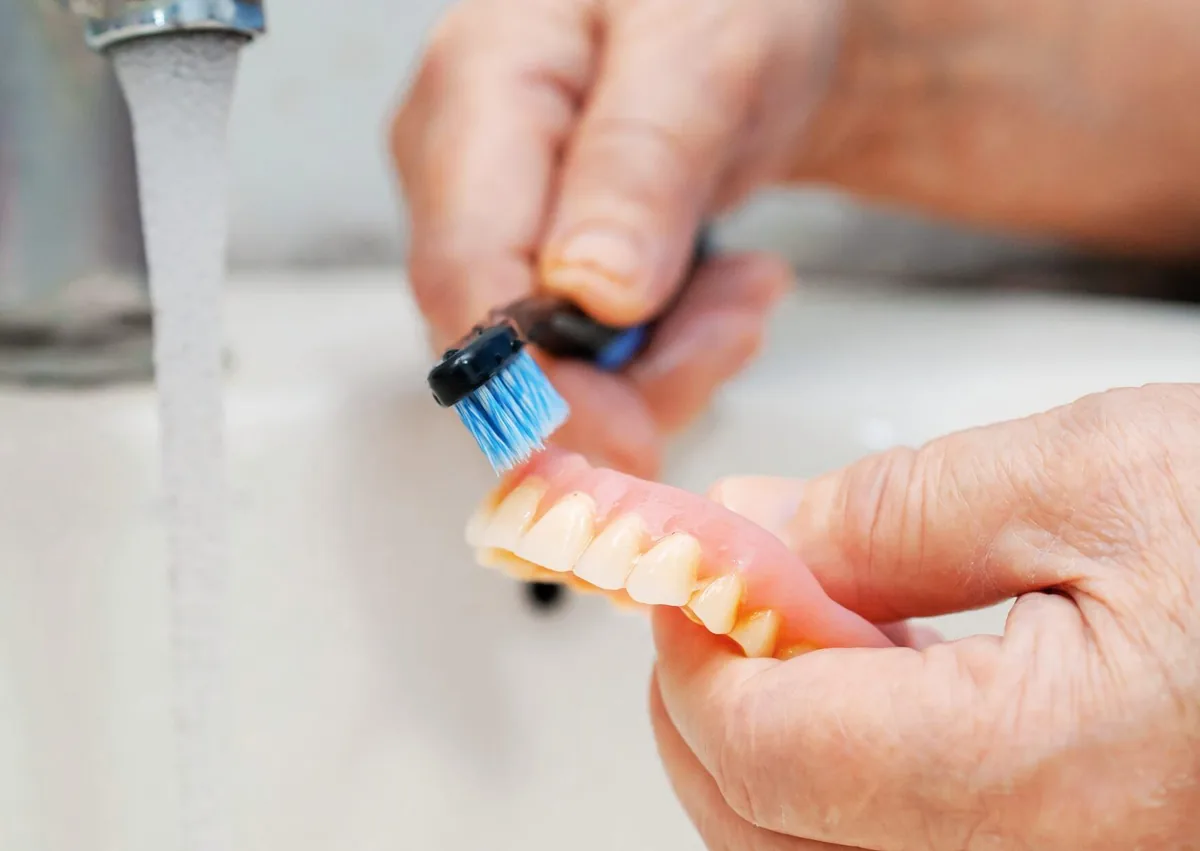
Clean dentures every day with a denture brush and a cleaner made for denture materials. Regular toothpaste can be too abrasive, and hot or boiling water can warp acrylic parts.
Remove and store removable dentures as directed by your dentist. Many patients are advised to take them out while sleeping so the oral tissues can rest.
Clean the gums, tongue, palate, remaining teeth, and any implant attachments as instructed. Denture care does not replace daily oral hygiene.
Handle dentures over a folded towel or a sink filled with water to reduce the chance of breakage if dropped. Keep regular dental visits even if you no longer have natural teeth, because fit, tissue health, and wear still need to be monitored.
Dentures can restore appearance, improve speech, and make a wider range of foods easier to manage. Many patients also find that dentures help restore your confidence in daily life. For broader treatment planning and alternatives, see options for extensive tooth loss.
Conventional removable dentures do not function exactly like natural teeth. They also cannot stop the jawbone changes that happen after tooth loss.
Implant support may improve retention and chewing stability for the right candidate, but it requires health screening, bone evaluation, surgery, healing, and long-term maintenance. Conditions such as uncontrolled diabetes, active gum disease, smoking, some medications, and limited bone volume may affect treatment planning without automatically ruling every patient out. To learn more, read about dental implants or see how implant dentures work.
Schedule a dental evaluation if a denture feels uncomfortable, unstable, damaged, or several years old without a recent professional check. Seek prompt care for severe or worsening pain, facial swelling, uncontrolled bleeding, fever, trouble swallowing or breathing, or a mouth sore, lump, or color change that lasts more than about two weeks.
To confirm whether a reline, repair, or a replacement denture is best, arrange a focused evaluation of fit and function.
Smileology offers full & partial dentures in Niceville, FL, Miramar Beach, FL, and Crestview, FL, with care available near Niceville and Miramar Beach. Call Niceville at (850) 897-4488, Miramar Beach at (850) 424-7887, or Crestview at (850) 331-3392, or schedule online to set a visit.
Some dentures stay intact for more than 10 years, but that does not mean the fit or bite is still healthy. Older dentures should be checked for worn teeth, hidden damage, tissue changes, and reduced facial or chewing support.
There is no fixed schedule because bone and gum changes vary from person to person. A dentist may recommend a reline when the denture no longer adapts closely to the gums but the teeth, bite, and overall condition are still acceptable.
Using more adhesive can be a sign of changing fit, although saliva levels, denture design, and placement technique also matter. A dental exam can show whether an adjustment, reline, repair, or replacement is the better solution.
Immediate dentures often loosen during the first several months after extractions because the gums and jaw change shape as they heal. They commonly need adjustments and relining, and some patients later move to a newly made long-term denture.
No. Implants can function for many years with proper care, but attachments, denture teeth, and the denture base can still wear out and may need maintenance or replacement.