
Same-Day Emergency Dental Appointments
We offer same-day relief for urgent dental issues like tooth pain or broken, cracked, or chipped teeth. Call now to be seen right away!
Affordable dental implants in Niceville, FL, are often possible when treatment is planned around the number of missing teeth, bone support, restoration type, and available payment options. The most practical first step is a comprehensive implant evaluation with a written estimate that separates surgery, bone procedures, the implant crown or prosthesis, and follow-up care.
Implants usually cost more upfront than removable dentures or traditional bridges, but they can provide stable function without relying on neighboring teeth for support. Affordability should reflect the full treatment plan and long-term value, not just the lowest advertised fee. For a detailed comparison, see dental implants and bridges.
If you're weighing long-term replacement options for missing teeth, exploring dental implants can clarify which plan balances durability, function, and budget. Smileology in Niceville, FL offers comprehensive evaluations that produce a written, itemized estimate so you can compare true treatment value.
A missing tooth leaves more than a visible gap. Nearby teeth can shift, chewing may become less balanced, and the jawbone in that area can gradually shrink because it no longer receives stimulation from a tooth root; learn more about bone loss.
Dental implants are small posts, usually made from titanium, placed in the jaw to replace that missing root. After the implant bonds with surrounding bone through the osseointegration process, it can support a crown, bridge, or denture.
Implants do not prevent every future dental problem. Gum disease, decay in nearby teeth, grinding, smoking, and poor home care can still affect the overall result.
The right restoration depends on how many teeth are missing, where they are located, how much bone support is present, and how much bite force the area handles. Each option has different cost, maintenance, and longevity considerations.
|
Treatment |
Common Use |
Main Advantage |
Important Limitation |
|---|---|---|---|
|
Single implant and crown |
One missing tooth |
Does not require cutting down adjacent teeth |
Requires adequate bone and healing time |
|
Implant-supported bridge |
Several neighboring missing teeth |
Replaces multiple teeth with fewer implants |
Cleaning beneath the bridge requires care |
|
Implant-retained denture |
Many or all teeth missing |
Improves denture stability |
May still be removable, depending on design |
|
Fixed full-arch restoration |
Most or all teeth in an arch missing |
Provides a nonremovable set of replacement teeth |
Higher cost and more complex maintenance |
|
Traditional bridge |
One or several missing teeth |
Usually avoids implant surgery |
Uses adjacent teeth for support |
|
Removable partial or full denture |
Multiple missing teeth |
Often has the lowest initial cost |
May move, affect chewing, or require adjustment |
The least expensive option is not always the best clinical choice. A qualified implant clinician should explain why a specific design fits the findings and what reasonable alternatives are available.
When several teeth are missing, implant-supported dentures can improve stability and comfort compared with traditional removable dentures. When most or all teeth in an arch are affected, full mouth dental implants or another full-arch option may offer better long-term value.
Implant fees vary because the phrase “dental implant” may refer only to the implant post or to the entire restored tooth. A complete single-tooth estimate may include imaging, surgical placement, an abutment, the final crown, and follow-up visits.
Additional procedures can change the total cost. Bone grafting may be recommended when the ridge is too narrow or shallow, and an upper back tooth may need a sinus lift to create enough bone below the sinus cavity.
Sedation, temporary teeth, tooth extraction, the number of implants, laboratory materials, and case complexity can also affect the fee. If you are comparing affordable dental implants in Niceville, FL, ask whether each quote includes the complete implant restoration and how unexpected findings are handled.
Dental insurance may help pay for an extraction, crown, denture, or bone graft even when implant coverage is limited. A written pretreatment estimate can clarify deductibles, annual maximums, waiting periods, and exclusions.
Payment plans or third-party financing may spread treatment costs over time, but interest rates and approval terms should be reviewed carefully. Health savings accounts and flexible spending accounts may also be used for eligible dental expenses under plan rules.
Many adults with one or more missing teeth may be candidates for implants, including some people with bone loss. Candidacy depends on oral health, bone volume, healing capacity, medical history, and the ability to keep the restoration clean.
Active gum disease or untreated decay usually needs to be addressed first. Diabetes, smoking or nicotine use, immune conditions, certain bone-related medications, previous radiation therapy, and severe grinding may increase risk or require coordinated planning, but they do not always rule out treatment.
An evaluation often includes an exam, periodontal measurements, a review of medications and health conditions, and dental imaging. A cone beam CT scan may be recommended to assess bone dimensions and nearby structures such as nerves and sinuses.
Age alone is rarely the deciding factor for an adult. Implant placement is usually delayed in younger patients until jaw growth is complete, while older adults may still qualify if their oral and general health support healing.
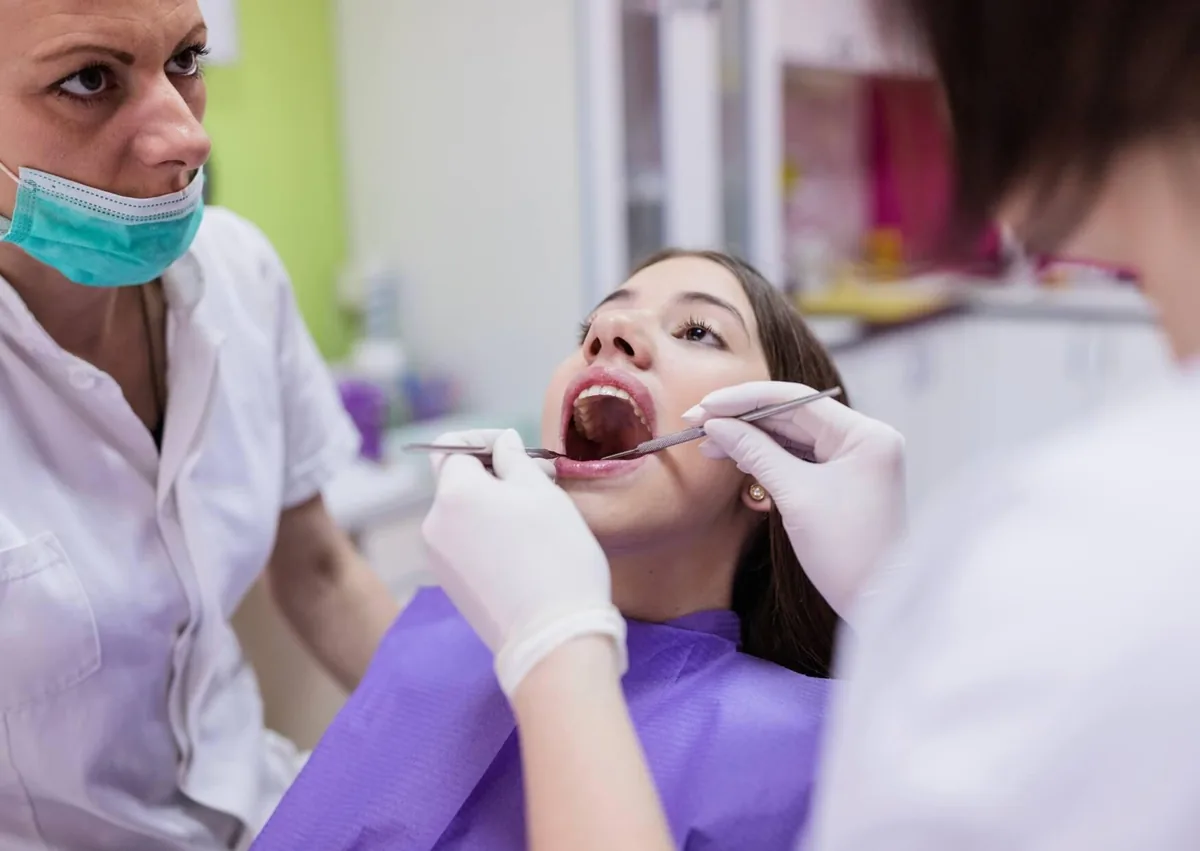
Treatment often starts by controlling infection and performing tooth extraction for teeth that cannot be restored. If grafting is needed, it may be done before or at implant placement depending on the defect and treatment plan.
During surgery, the area is numbed and the implant is placed in the jawbone. Some patients can receive a temporary tooth quickly, but immediate teeth are not right for every case and usually require diet and bite restrictions during healing.
Osseointegration often takes several months. Timing varies based on implant location, bone quality, grafting, health factors, and the stability achieved at placement; see the dental implant timeline for more detail.
After healing, the dentist attaches the abutment and takes records for the final crown, bridge, or denture. Full-arch and more complex cases may need additional try-in visits to refine the bite, appearance, and speech.
Mild swelling, tenderness, bruising, or slight bleeding can happen after implant placement and usually improves during early healing. Patients should follow instructions about food texture, oral hygiene, activity, and any prescribed or recommended medication.
Contact the treating office promptly for severe, worsening, or persistent pain or swelling, or for pus, fever, uncontrolled bleeding, increasing numbness, difficulty swallowing, or trouble breathing. Trouble breathing, rapidly spreading facial or neck swelling, or other signs of a serious reaction require emergency care.
Implants cannot get cavities, but plaque can inflame the surrounding tissues and contribute to peri-implant disease and bone loss. Daily brushing, cleaning around and beneath the restoration, and regular professional exams are essential.
A nightguard may be recommended for heavy grinding. Removable implant dentures also need routine cleaning of both the appliance and the implant attachments.
Maintenance visits help the dental team check the bite, screws, attachments, gum condition, and bone levels. Long-term success depends on both the treatment design and consistent follow-up care.
Implants can improve chewing stability, appearance, and confidence while helping preserve bone at treated sites. They can also avoid preparing healthy neighboring teeth when replacing a single missing tooth.
No clinician can guarantee that an implant will last for life. Failure can happen because of infection, poor integration, excess bite force, smoking, medical factors, poor cleaning, or mechanical wear involving the crown, screws, or denture components.
A lower price should not come at the expense of proper imaging, sterile technique, compatible components, a maintainable restoration, or qualified follow-up care. Patients should understand who performs each stage, what experience is relevant, and where complications would be managed. For a broader discussion, see dental implants pros and cons.
An implant consultation makes sense after a tooth is lost, when extraction is being considered, or when a bridge or denture no longer feels comfortable or functional. Early evaluation may preserve more options because bone shrinkage can progress after tooth loss.
Bring a medication list, relevant medical history, insurance information, and questions about timing or budget. A responsible treatment plan should explain alternatives, expected stages, risks, maintenance needs, and a written cost range before treatment begins.
If missing teeth are affecting eating, speech, or comfort, or if you have a loose tooth, swelling, drainage, or persistent pain, it is wise to get evaluated sooner. The consultation can determine whether implant treatment is appropriate and which approach offers a reasonable balance of health, function, and cost.
A focused implant consultation can identify necessary procedures, clarify costs, and preserve more treatment options when tooth loss is recent. Contact Smileology for dental implants in Niceville, FL, serving Miramar Beach and Crestview, to schedule your evaluation or call the office at (850) 897-4488 to discuss availability.
Costs vary widely because one quote may cover only the implant post while another includes the full restoration. The number of implants, imaging, extractions, grafting, sedation, temporary teeth, and the final crown or prosthesis all affect the total, so an exam and itemized estimate are necessary.
A lower fee does not automatically mean lower quality, but treatment should still include proper diagnosis, appropriate materials, sterile surgical care, and follow-up. Confirm what the quote includes and who will handle the surgery, restoration, and any complications.
Yes, many patients have enough bone for implant placement without grafting. Others may need a small graft, staged grafting, or a different implant design based on their three-dimensional anatomy and the planned restoration.
In some cases, an implant can be placed at the extraction visit. Infection, bone damage, implant stability, gum condition, and bite forces determine whether immediate placement or a temporary tooth is advisable. CEREC and other technologies can sometimes enable single day tooth restoration, but this is case-dependent.
Some plans provide partial benefits, while others exclude implant placement but cover related services. Ask the dental office and insurer for a pretreatment estimate, and verify annual maximums, waiting periods, exclusions, and replacement rules.