
Same-Day Emergency Dental Appointments
We offer same-day relief for urgent dental issues like tooth pain or broken, cracked, or chipped teeth. Call now to be seen right away!
Clean dental implants twice a day with a soft-bristled toothbrush and low-abrasive toothpaste, focusing on the gumline. Clean between the implant and nearby teeth every day with floss, an interdental brush, or a water flosser if your dental professional recommends one, and keep up with regular general dentistry visits and professional cleanings. For guidance on visit timing, see dental checkups.
Implants do not get cavities, but plaque can still irritate the gums and damage the bone that supports them. A steady home-care routine helps protect the tissues around the implant and may extend the life of the crown, bridge, or denture attached to it.
If you want your implant to stay comfortable, stable, and easier to clean, preventive general dentistry care plays an important role. Smileology in Niceville, FL Miramar Beach, FL Crestview, FL helps patients protect their gums, bone, and restorations with personalized maintenance guidance and practical home-care strategies.
A dental implant is a post placed in the jawbone to support a replacement tooth or prosthesis. That restoration may be a single crown, an implant-supported bridge, or a removable or fixed full-arch denture.
Plaque builds up on implant restorations just as it does on natural teeth. If plaque stays near the gumline, it can cause peri-implant mucositis, a reversible inflammation that may lead to redness, swelling, tenderness, or bleeding.
If inflammation is not controlled, it may progress to peri-implant diseases that involve loss of supporting bone. Persistent bleeding around an implant is not normal, even when there is little or no pain.
Use a manual or electric toothbrush with soft bristles. Angle the bristles toward the gumline and gently clean the front, back, and chewing surfaces for about two minutes total.
Choose a low-abrasive fluoride toothpaste unless your dentist or hygienist recommends a different product. Avoid hard scrubbing and highly abrasive pastes, which can irritate the gums or scratch some restoration materials.
A toothbrush cannot fully clean tight spaces under contact points or around implant components. Depending on your restoration, useful tools may include:
Guide floss gently along each side of the implant restoration instead of snapping it into the gums. If floss keeps shredding, catching, or will not pass through, stop forcing it and ask a dental professional to check the area.
Mouth rinse can support your routine, but it does not replace brushing or cleaning between teeth. A nonprescription antimicrobial rinse may help some patients, though alcohol-containing products can feel drying or irritating.
Prescription rinses should be used only as directed by a dentist. The best option depends on your gum health, dry mouth symptoms, restoration materials, and overall risk factors.
Clean a single implant crown much like a natural tooth, with extra attention where the crown meets the gums. Floss or a properly sized interdental brush can help remove plaque from both sides of the implant.
The crown shape and the position of nearby teeth affect which tool fits safely. A dental hygienist can recommend the right size and show you how to use it without injuring the tissue.
A bridge connects replacement teeth together, so regular floss cannot reach every area on its own. Use a floss threader, spongy floss, interdental brush, or water flosser to clean beneath the bridge and around each implant support.
Food trapping under a bridge is common and may require more than one tool. Surfaces used in zirconia fixed bridges may also affect which cleaners are safest. Clean beneath the full bridge every day, not just around the outer edges.
Fixed full-arch restorations stay in the mouth and need cleaning underneath the prosthesis, especially around each implant. Angled interdental brushes, specialty floss, and water flossers can help, but the best method depends on the design of the restoration.
Removable overdentures should be taken out as directed and cleaned over a towel or a basin of water to reduce the chance of breakage if dropped. Brush the denture with a suitable denture cleanser, clean the attachment areas carefully, and avoid hot water that could distort the prosthesis.
For more guidance on retention and care, see implant-supported dentures. If you are comparing full-arch options, you can also learn more about implant stabilized dentures.
After implant placement, the surgical site needs time to heal while the implant bonds with the bone. This process, called osseointegration, often takes several months, though the timeline varies based on implant location, bone quality, grafting, general health, and the final restoration plan.
Follow your surgeon's instructions closely during early healing. Do not brush directly over a fresh surgical site, use a water flosser near it, or disturb sutures unless your treating clinician says it is safe.
As healing progresses, your dental team may add brushing and other cleaning tools step by step. Avoid smoking and vaping during healing because smoking and implants are linked to delayed tissue repair and a higher risk of complications.
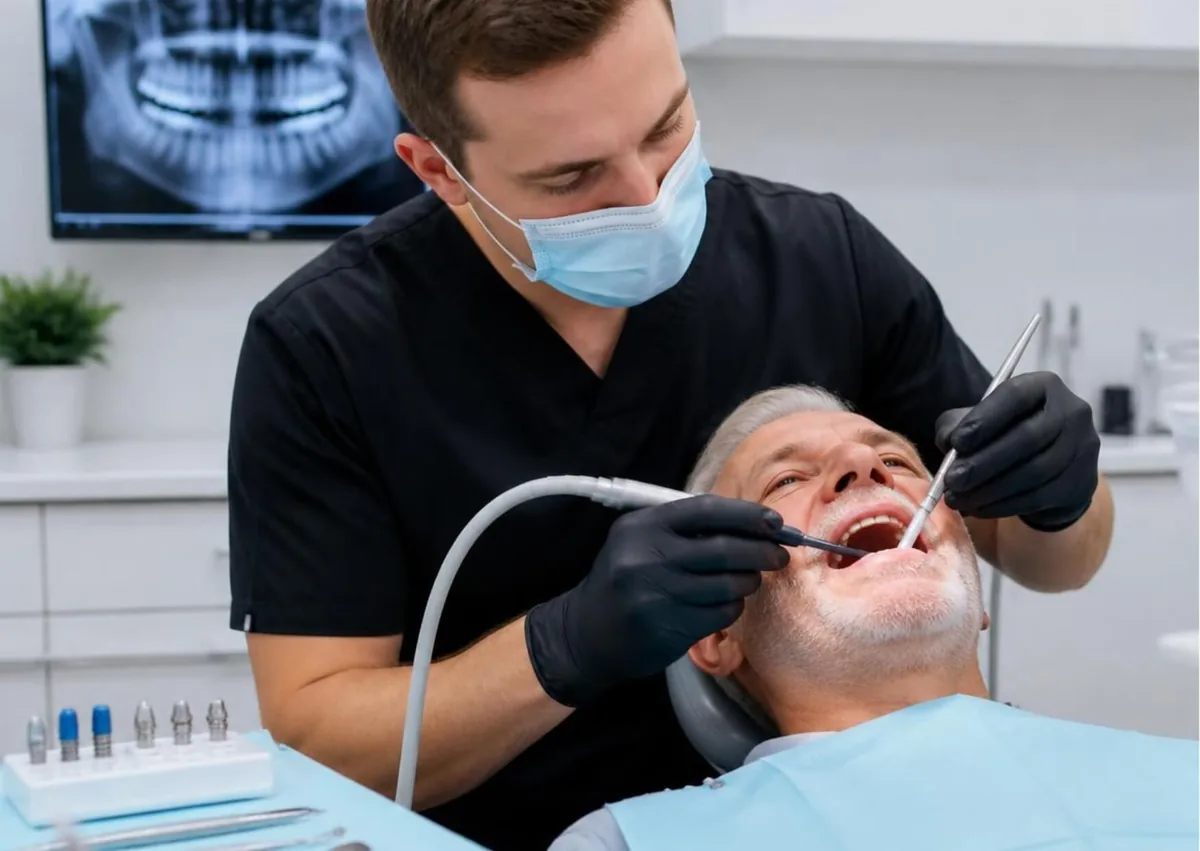
Implants still need professional monitoring, even when they feel normal. At maintenance visits, the dental team may check for gum inflammation, plaque buildup, bite forces, restoration stability, and bone changes.
Cleaning methods also matter. Dental professionals use instruments and techniques intended for implant surfaces when care is needed.
Visit frequency is individualized. More frequent care may be recommended for patients with a history of gum disease, poorly controlled diabetes, tobacco use, dry mouth, difficult-to-clean restorations, heavy plaque buildup, or inconsistent home care.
Nighttime grinding can overload an implant restoration even when cleaning is excellent. A dentist may recommend a protective appliance after evaluating your bite, but over-the-counter guards are not right for every implant case.
Good implant cleaning can reduce plaque, inflammation, odor, and food buildup. It also helps protect the gums and bone around the implant and may help you notice changes early.
Home care has limits. It cannot remove hardened tartar, fix a loose component, correct an uneven bite, or treat bone loss.
Implant restorations can also chip, wear, or loosen over time. Long-term maintenance involves both tissue health and the mechanical fit of the restoration.
Schedule an implant evaluation if cleaning is painful, difficult, or no longer seems effective. You should also be seen if food keeps getting trapped or if the gums bleed for more than a few days despite gentle, consistent care.
A consultation is also helpful before buying specialized tools. Restoration design, tissue shape, hand dexterity, and disease risk all affect which routine is safest and most effective.
Contact a dentist promptly for worsening swelling, pus, persistent bleeding, gum recession, a bad taste, increasing pain, or a visible change around an implant. A loose crown or bridge, clicking, a changed bite, or any implant restoration that moves also needs evaluation and should not be adjusted at home.
Seek urgent care for rapidly spreading facial swelling, fever with dental swelling, difficulty swallowing, difficulty breathing, uncontrolled bleeding, or severe symptoms after surgery. Implant problems may cause few symptoms at first, so do not wait for severe pain before getting checked.
A dentist or dental hygienist can determine whether the problem involves the gums, bone, bite, or restoration. Early evaluation is especially important when symptoms are persistent, worsening, or hard to explain.
Arrange a professional maintenance visit so the team can assess gum health, restoration fit, and your cleaning routine. Contact Smileology for general dentistry in Niceville, FL; Miramar Beach, FL; and Crestview, FL. Call Niceville at (850) 897-4488, Miramar Beach at (850) 424-7887, or Crestview at (850) 331-3392 to book an appointment or discuss same-day availability.
Yes. Electric toothbrushes are generally safe for healed dental implants when used with a soft brush head and light pressure.
Yes, but the floss type and technique matter. Move implant-safe floss gently along the restoration, and ask a dental professional for help if it catches, shreds, or causes repeated bleeding.
A water flosser can help remove debris and disrupt plaque, especially under bridges or full-arch restorations. It is usually most effective when used with brushing and, when appropriate, floss or interdental brushes.
The interval depends on gum health, plaque levels, restoration design, medical history, and any past gum disease. Many patients are seen every three to six months, but the treating dental team should set the schedule.
Bleeding may be caused by plaque-related inflammation, brushing too hard, or another tissue problem. If it continues for more than a few days, comes back often, or happens with swelling, discharge, pain, or looseness, schedule a dental exam.