Same-Day Emergency Dental Appointments
We offer same-day relief for urgent dental issues like tooth pain or broken, cracked, or chipped teeth. Call now to be seen right away!
The typical single tooth implant cost in the United States is about $3,000 to $6,000 for the implant, abutment, and crown. Your total can be lower or higher depending on location, materials, imaging, tooth removal, bone grafting, sedation, and whether insurance helps cover any part of treatment.
A personalized estimate requires an exam and imaging because the visible replacement tooth is only one part of treatment. A dentist also needs to evaluate the bone, gums, bite, nearby teeth, and health factors before deciding which procedures are needed for dental implants.
If you're weighing options for replacing a single missing tooth, learning more about dental implants can help you understand long-term function, appearance, and cost. Smileology in Niceville, FL offers personalized implant evaluations that clarify needed procedures and likely costs so you can make an informed decision.
A complete single-tooth implant restoration usually has three parts. The implant is the post placed in the jaw, the abutment connects the implant to the restoration, and the crown is the tooth-shaped part you see above the gums.
Not every quote includes the same services. One office may bundle the full treatment, while another may list the exam, 3D imaging, implant placement, abutment, and crown as separate charges.
Ask for a written treatment plan with each expected fee. It should also explain whether temporary teeth, follow-up visits, sedation, grafting, or complication-related care are included.
A missing tooth can affect appearance, chewing, speech, and bite stability. Nearby teeth may gradually drift or tilt into the space, although the amount of movement varies from person to person.
The jawbone in an empty area can also shrink over time because it no longer gets normal stimulation from a tooth root. An implant may help maintain bone around the site, but it cannot reverse all existing bone loss or stop every age-related change. Learn more about bone loss.
Not every missing tooth must be replaced right away. A dentist can explain whether monitoring the space is reasonable or whether restoration would better protect function and alignment.
The condition of the treatment site has a major effect on cost. If the tooth is still present, tooth extraction may be needed, and limited bone may require grafting before or during implant placement.
Other factors that can change the total include:
Front teeth often need more cosmetic planning to create a natural gumline and close color match. Back teeth handle greater chewing forces, so implant position and crown design must support long-term function.
An implant is not the only way to replace one missing tooth. For information about alternatives, see crowns and bridges. The best choice depends on the health of nearby teeth, available bone, cosmetic goals, expected longevity, budget, and comfort with surgery.
|
Option |
General Cost Pattern |
Main Advantage |
Important Limitation |
|---|---|---|---|
|
Single implant and crown |
Highest initial cost in many cases |
Does not require cutting down neighboring teeth |
Requires surgery and healing time |
|
Fixed dental bridge |
Often moderate initial cost |
Usually completed without implant surgery |
Typically requires reshaping adjacent teeth |
|
Removable partial denture |
Often lowest initial cost |
Non-surgical and removable |
May feel less stable and require adjustment |
A lower upfront fee does not always mean a lower long-term cost. Bridges and removable appliances may need repair or replacement, and implants also require maintenance and can develop complications.
Many adults with one missing or non-restorable tooth may be candidates if they have enough bone, healthy gums, and health that supports healing. Growth should be complete before routine implant placement, so implants are uncommon in younger patients whose jaws are still developing.
Smoking or vaping, uncontrolled diabetes, untreated gum disease, certain medications, immune conditions, and a history of radiation to the jaws can increase risk. These factors do not always rule out treatment, but they may change the preparation, timing, or expected outcome.
Teeth grinding and heavy bite forces also matter. A dentist may adjust the crown design or recommend a night guard after evaluating the bite.
Implant treatment often takes several months because the bone needs time to attach to the implant surface, a process called osseointegration. For a more detailed schedule, see the implant timeline. Some patients can receive an implant right after extraction or get a temporary tooth the same day, but that depends on bone quality, infection control, bite forces, and implant stability.
|
Stage |
What Commonly Happens |
Approximate Timing |
|---|---|---|
|
Evaluation |
Examination, X-rays or 3D imaging, and treatment planning |
One or more visits |
|
Site preparation |
Extraction or grafting when needed |
Same day as placement or months before |
|
Implant placement |
Implant is positioned in the jaw |
One surgical visit |
|
Healing |
Bone integrates with the implant |
Often 2 to 6 months |
|
Final restoration |
Abutment and custom crown are fitted |
Usually several visits |
These are general ranges, not guarantees. Extensive grafting, medical concerns, implant stability, or healing problems can extend the timeline.
Mild soreness, swelling, bruising, or minor bleeding can happen during the first few days. Your dentist should give you specific instructions for cleaning, eating, activity, and follow-up care. For meal ideas during recovery, see soft foods after surgery.
Contact the dental office promptly if pain or swelling gets worse after first improving, if bleeding continues, or if you notice fever, drainage, a bad taste, numbness that does not improve, or a loose implant or temporary tooth. Rapidly spreading facial swelling, trouble breathing, or trouble swallowing requires urgent emergency care.
Dental insurance may help pay for part of the exam, extraction, crown, or implant procedure, but coverage varies widely. Annual maximums, waiting periods, missing-tooth clauses, deductibles, and exclusions can still leave a significant out-of-pocket balance.
Medical insurance may sometimes contribute when tooth loss or reconstruction relates to trauma, tumors, or certain medical conditions. In most cases, routine implant treatment is handled as dental care.
A useful estimate should separate professional fees, lab charges, preliminary procedures, and the final restoration. You can also ask about staged payments, financing terms, and whether future maintenance or repairs are billed separately.
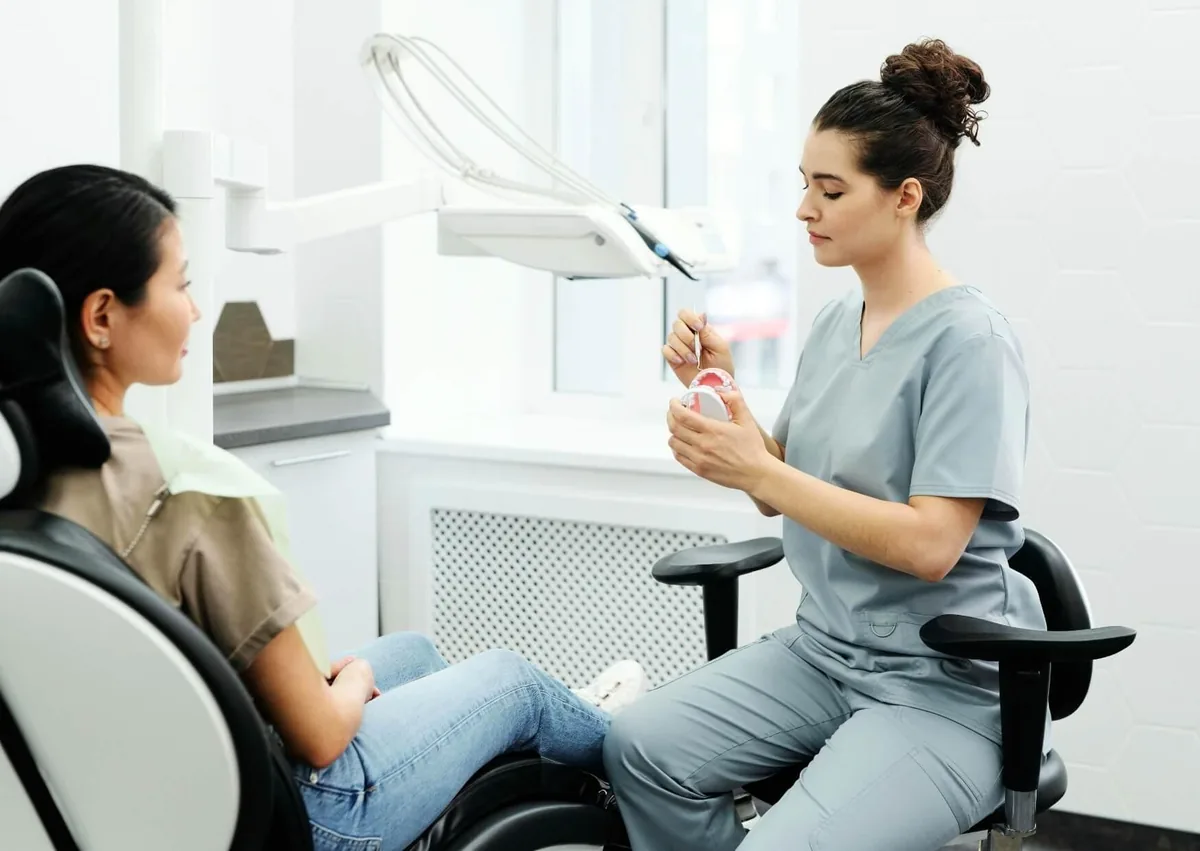
A successful implant can provide stable chewing, a natural appearance, and a restoration that does not depend on neighboring teeth for support. With good care, implants may function for many years, but no implant or crown should be considered permanent or guaranteed for life.
Possible complications include infection, gum recession, bone loss around the implant, loosening, crown fracture, damage to nearby structures, or failure of the implant to integrate. Placement in the upper back jaw or near nerves and tooth roots may require added planning to reduce risk.
The implant and crown also do not age the same way. The implant may stay stable while the crown eventually needs repair or replacement because of wear, chipping, color change, or bite-related damage.
Implants cannot get cavities, but the surrounding gums and bone can still become inflamed or infected. Daily brushing, cleaning between the implant and nearby teeth, and regular professional exams help protect the supporting tissues.
Maintenance intervals should match your risk factors, including gum disease history, smoking, diabetes, dry mouth, and plaque buildup. A clinician may also use periodic X-rays to monitor bone levels and check the crown, bite, and implant stability.
Schedule a consultation if a tooth cannot be restored, if a space affects chewing or appearance, or if an existing bridge or removable tooth no longer feels satisfactory. An exam and proper imaging are the only reliable ways to compare options, identify grafting needs, and receive a personalized estimate.
Start with an exam and imaging so your dentist can create an itemized treatment plan and estimate tailored to your needs. Smileology focuses on dental implants in Niceville, FL and nearby Miramar Beach and Crestview; call (850) 897-4488 or schedule an appointment to review your options.
Not always. Some offices provide one bundled fee, while others bill separately for imaging, extraction, grafting, implant placement, the abutment, and the crown. Request an itemized estimate so different quotes can be compared accurately.
Some plans cover a percentage of certain stages, while others exclude implants or pay only toward a less costly alternative. Coverage depends on the plan’s deductible, annual maximum, waiting period, and replacement rules.
In selected cases, an implant and temporary tooth may be placed on the same day. The final crown often comes later, after integration and gum healing, and immediate treatment is not appropriate for every site.
A bridge often has a lower initial fee, especially when no grafting is needed for the implant option. Long-term costs vary because bridges and implant crowns can both require future repair or replacement.
Many implants function for years or decades, but longevity depends on healing, oral hygiene, gum health, bite forces, smoking, health conditions, and professional maintenance. The crown may need replacement before the implant itself. Read more about how long implants last.



We work with most PPO dental plans, including Aetna, MetLife, Guardian, United Concordia, UnitedHealthcare, and Cigna. In-network status depends on your employer plan. Delta Dental plans are handled on an out-of-network basis; contact us to review your benefits.