
Same-Day Emergency Dental Appointments
We offer same-day relief for urgent dental issues like tooth pain or broken, cracked, or chipped teeth. Call now to be seen right away!
Responsibility for dental implant failure depends on why the implant failed, when the problem started, and whether both clinical and home-care standards were followed. A failed implant does not automatically mean the dentist or the patient was at fault, because implants can fail even when treatment planning, placement, and maintenance were appropriate.
In some cases, planning records may include advanced tools such as YOMI robotic surgery, which can help support precise implant placement and may be relevant during review. For a balanced view of benefits and drawbacks, see dental implant pros and cons.
If you are weighing options after a failed implant or need an expert evaluation of replacement and salvage possibilities, consider dental implants as a restorative pathway. Smileology in Niceville, FL provides personalized assessments and clear treatment plans to help you understand risks, timing, and expected outcomes.
Responsibility may rest with the treating clinician if poor planning, improper placement, inadequate infection control, or a flawed restoration design contributed to the outcome. That said, responsibility should be based on a clinical and records review, not on the fact that an implant became painful or loose.
A patient may also contribute to failure by smoking, missing follow-up visits, not cleaning around the implant, overloading the area during healing, or not sharing important medical information. Risk factors such as uncontrolled diabetes, active gum disease, teeth grinding, immune suppression, and some medications can increase failure risk without proving negligence by either party.
When infection or peri-implant inflammation is present, gum disease treatment may be an important part of stabilizing the area and planning next steps. In less common cases, a defective screw, implant component, or lab-made restoration may also play a role.
|
Possible Contributor |
Examples |
How It Is Assessed |
|---|---|---|
|
Biological complication |
Poor bone integration, infection, progressive bone loss |
Examination, probing, imaging, and health history |
|
Treatment-related issue |
Positioning, planning, surgical, or restoration concern |
Records, scans, procedure notes, and independent clinical review |
|
Patient-related factor |
Smoking, poor hygiene, missed care, early overload |
History, maintenance records, and examination |
|
Device or component issue |
Fractured screw, implant, or restoration |
Component inspection, imaging, and manufacturer information |
A dental implant replaces a tooth root and must bond with the surrounding jawbone through osseointegration. Early failure happens when that bond does not form well, while later failure often involves inflammation and bone loss around the implant, often called peri-implantitis.
Published data on implant survival rates show that implants are generally successful, but failure is still a recognized complication. In other words, a bad outcome can occur even when treatment was reasonable and the patient was cooperative.
Tooth loss can reduce bone volume before implant treatment even begins. Prior infection at the tooth site may also affect healing, and bone loss after extraction can make grafting or staged treatment necessary.
Not every problem means the implant itself has failed. A loose screw, chipped crown, or bite imbalance may be a restoration complication that can sometimes be repaired without removing the implant.
Good implant candidates usually have enough bone, healthy gums, manageable medical risks, and the ability to keep up with daily cleaning and follow-up care. A full evaluation may include a dental and medical history, gum assessment, bite analysis, and three-dimensional imaging when needed.
If implants are not the best immediate choice, alternatives may include a fixed bridge, removable partial denture, complete denture, or delayed treatment while health issues are stabilized. Each option has different tradeoffs related to function, appearance, maintenance, treatment time, and cost.
|
Option |
Typical Advantage |
Important Limitation |
|---|---|---|
|
dental implants |
Does not require support from adjacent teeth |
Requires surgery, healing, and sufficient bone |
|
Fixed bridge |
Often avoids implant surgery |
Usually requires reshaping supporting teeth |
|
Removable denture |
Can replace several teeth with less invasive treatment |
May move and requires removal for cleaning |
|
No immediate replacement |
Avoids treatment during stabilization |
Bone loss and changes in chewing or tooth position may continue |
Some implant problems appear during the healing phase, before the final crown or bridge is attached. Others develop years later because of plaque-related inflammation, bite overload, health changes, or normal mechanical wear.
Evaluation usually includes checking for mobility, swelling, bleeding, drainage, bite problems, restoration fit, and changes in bone levels on current and earlier images. The clinician may also review consent forms, treatment notes, implant details, referrals, follow-up attendance, and postoperative instructions.
If there is disagreement about the cause, ask for complete records and a clear explanation of the diagnosis and proposed solution. You may also seek an independent opinion from a dentist, periodontist, prosthodontist, or oral and maxillofacial surgeon, and it helps to choose a dental practice with relevant implant experience.
Clinical responsibility and legal liability are not always the same issue. Questions about negligence, contracts, warranties, or reimbursement may require guidance outside the dental exam itself.
Treatment depends on whether the problem affects the crown, the implant connection, the surrounding tissue, or the implant body itself. Options may include repairing the restoration, treating inflammation, adjusting the bite, grafting lost bone, removing the implant, replacing it after healing, or choosing a bridge or removable prosthesis instead.
Replacement is not always immediate. Infection, bone loss, local anatomy, and graft-healing needs may extend treatment for several months, and some sites are not ideal for another implant.
If replacement is appropriate, the discussion often returns to dental implants and the safest timing for a new restoration. Before corrective care begins, patients should also review expected fees, insurance limits, and the cost of dental implants.
Office policies and warranties vary. A warranty may cover a component or replacement service, but not necessarily grafting, sedation, specialist care, or complications tied to excluded risk factors.
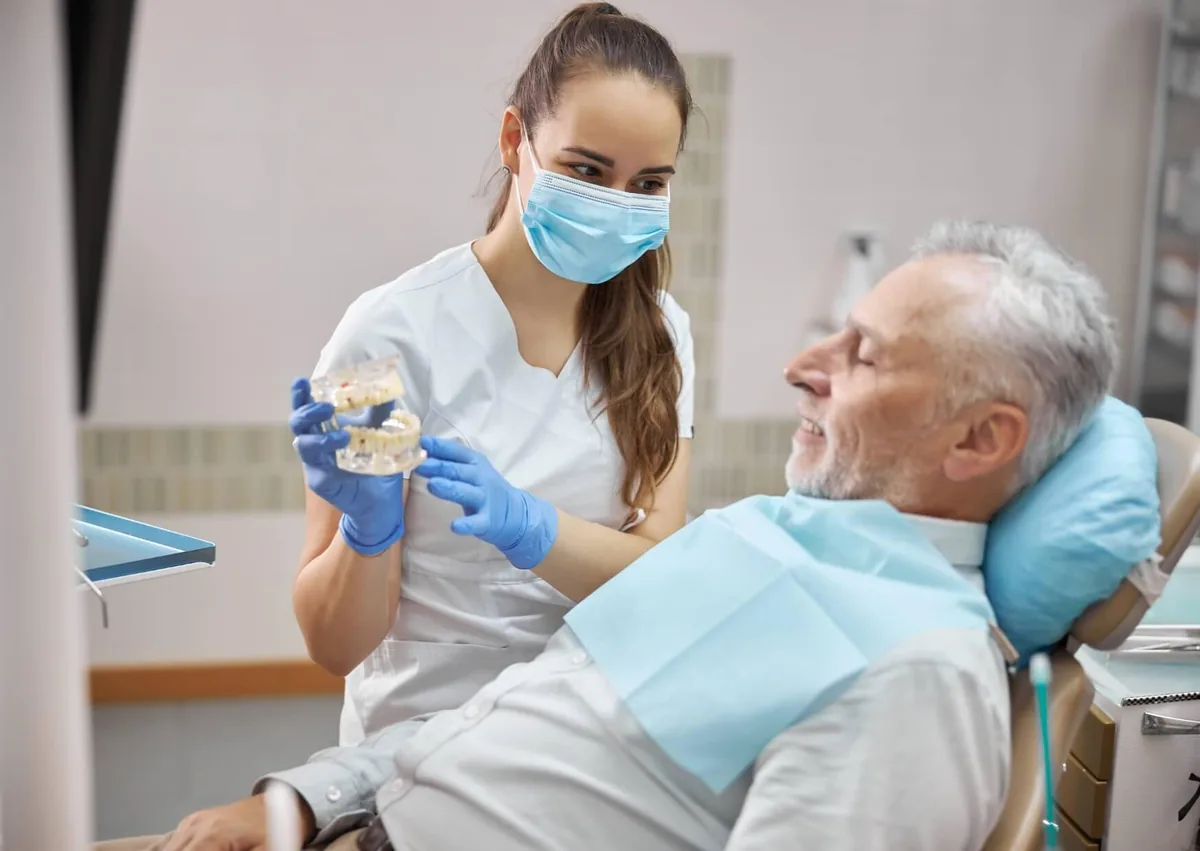
Implants need lifelong maintenance even though they cannot get cavities. Daily cleaning, regular professional care, monitoring of gum and bone levels, and control of smoking or diabetes all help reduce preventable complications.
Guidance on peri-implant diseases also emphasizes the importance of home care and routine follow-up. Patients who grind or clench may benefit from custom mouth guards to reduce excessive force on the implant and restoration.
Do not wait for a routine checkup if you notice looseness, bleeding, swelling, a changed bite, or trouble cleaning around the implant. Early treatment may preserve more bone and make repair simpler.
Seek urgent dental care for rapidly increasing swelling, fever, pus, severe or worsening pain, uncontrolled bleeding, trouble swallowing or breathing, or an implant or restoration that becomes mobile. Persistent or unclear symptoms also deserve prompt evaluation.
For a focused evaluation of a failed implant and guidance on repair or replacement, arrange a consultation to review imaging and treatment options. Smileology offers dental implants consultations in Niceville, FL and serves patients from Miramar Beach and Crestview; contact our office by calling (850) 897-4488 to schedule your appointment.
No. Implant failure is a recognized complication and does not by itself establish medical malpractice; that usually requires evidence that care fell below the applicable professional standard and caused harm.
Not necessarily. Replacement policies depend on the cause, timing, consent and financial agreements, manufacturer coverage, office policy, and whether postoperative and maintenance requirements were followed.
An independent clinician can assess likely causes and document findings, but some cases remain multifactorial or uncertain. A legal determination of liability is separate from a clinical opinion.
No. The crown or connecting screw may be loose while the implant remains integrated with bone, but only an exam and appropriate imaging can tell the difference.
New mobility, swelling, drainage, bleeding, bite changes, or persistent pain should be checked promptly. Fever, spreading swelling, or trouble breathing or swallowing requires urgent care.